
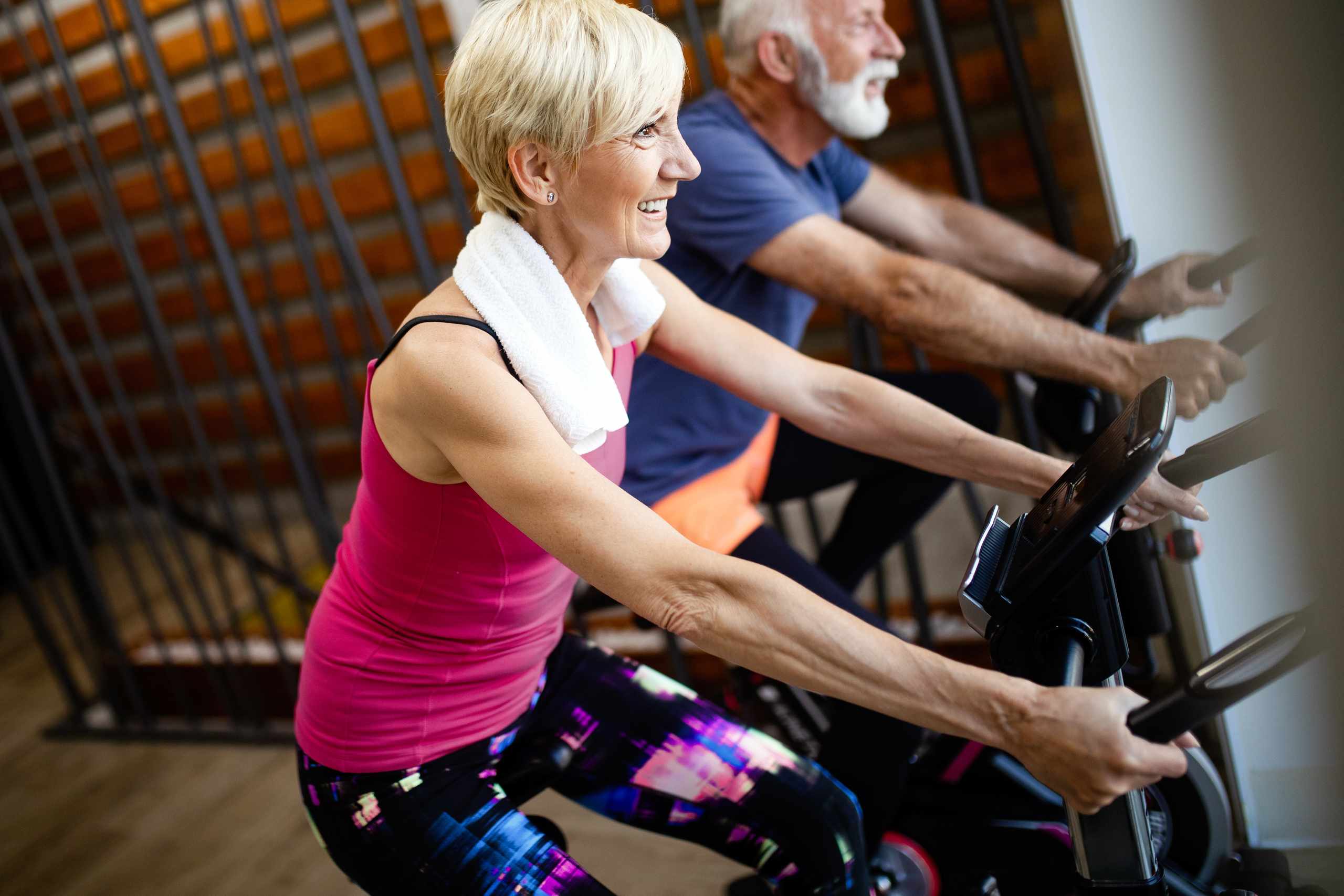
Your first workout doesn’t have to be epic to be effective. The most useful first session is often the one that leaves you with better form than you had at the start, not one where you finish feeling like you’re not sure how you just did that. If you’re trying to fit squats, lunges, planks, push-up variations, cardio, stretching, and a long list of reps into the same session, you’re going to struggle to pay attention to what your body’s doing. A smaller session lets you actually learn the moves instead of just trying to get them done.
Think of the session in three parts: warm-up, main, and cool-down. The warm-up prepares your joints, breathing, and range of motion before the main moves. You can do some easy marching, shoulder circles, hip circles, easy bodyweight hinges, and gentle bodyweight squats without trying to be deep. You’re not trying to get tired; you’re trying to make the first main moves feel less stiff and more familiar.
In the main part, do fewer moves than you probably think you need. You could do a squat pattern, a plank variation, and one low-impact cardio movement and that’ll already teach you a lot. For example, you could practice slow squats, an elevated plank with hands on the chair or on a wall, and step touches or marching in place. Keep the reps manageable; when your knees start drifting in, your lower back is starting to arch, or your breathing is held and tight, you’ve probably done enough for now.
Rest isn’t wasted time; it’s your way to reset your posture, notice fatigue, and come back to the next set with better control. Many learners treat every rest as a challenge of willpower and jump right back in before their body is ready for it. Instead of that, you could use your rest to check these three things: Can I still breathe? Are my arms or legs still steady? Do I remember the form cue for the next set? That rest alone will help your next rep far more than pushing another rep anyway.
Your first session might be shorter than you think. A few minutes of warm-up, a short couple of sets of two or three exercises, and then a calm cool-down. When you cool down, avoid bouncing through stretches, or pushing through a range of motion you’re not really ready for yet; hold stretches longer until you feel yourself relaxing, especially at your hips, calves, shoulders, and back. Your cool-down should teach you how to recover as part of the workout, not as something separate from the workout.
To avoid the first session from being an overload of too much, track not just what you did, but also what happened. A journal or a simple workout tracker where you could write “squats felt stable until my last few reps,” “plank was easier on my hands at chair height,” or “needed more rest after the low-impact cardio” will be way more valuable than focusing on numbers. It will tell you which moves are ready to go again and which ones need a lighter variation.
Your first good session shouldn’t feel epic; it should leave you being able to talk about what you did: how you warmed up, what moves you did, where you lost control of your form and how you adjusted. The shorter it is, the easier that kind of talk will be, and fitness becomes much less of a puzzle than a skill you can build over with better knowledge.